10 Best Books Like Atomic Habits to Build Better Habits
If Atomic Habits changed how you think about everyday routines, the next step is simple: find the next book that helps you turn insight into action. The best books like Atomic Habits do not just repeat the same message with a different cover. They deepen the habit conversation in useful ways, whether that means improving your focus, strengthening your discipline, or making personal change easier to sustain.
This guide is built for readers who want practical follow-ups with a clear purpose. Some books explain the psychology behind habits. Others help you reduce distraction, improve self-control, or choose better priorities. Together, they create a stronger system for sustainable personal change.
What Is the Best Book Like Atomic Habits?
If you want the closest match to Atomic Habits, Tiny Habits is the strongest option because it stays focused on behavior design, tiny wins, and emotion-friendly habit creation. If you want a broader and more psychology-driven follow-up, The Power of Habit is a great next read. For readers who want more focus and consistency, Deep Work or The Compound Effect are excellent choices.
Quick Picks
- Best overall follow-up - Tiny Habits
- Best for Understanding Habit Psychology - The Power of Habit
- Best for Building Long-Term Consistency - The Compound Effect
- Best for Focus & Productivity - Deep Work
- Best Classic Personal Development Book - The 7 Habits of Highly Effective People
Comparison Table
| Book | Best For | Closest Atomic Habits Connection | Difficulty |
|---|---|---|---|
| Tiny Habits | Starting small and building momentum | BJ Fogg's behavior model | Easy |
| The Power of Habit | Understanding why habits form | Habit loops and behavior science | Easy to moderate |
| The Compound Effect | Daily discipline | Small actions compounding over time | Easy |
| Deep Work | Focus and distraction control | Designing an environment for better behavior | Moderate |
| Essentialism | Doing fewer things better | Identity and systems before goals | Easy |
| The 7 Habits | Personal leadership | Principle-based behavior change | Moderate |
| Indistractable | Reducing digital distraction | Making bad habits harder | Easy |
| Mindset | Changing how you approach growth | Becoming the kind of person who improves | Easy |
| Grit | Long-term perseverance | Staying consistent beyond motivation | Moderate |
| The 5 Second Rule | Taking immediate action | Breaking hesitation loops | Easy |
How I Chose These Books
I chose these books by asking a simple question: if someone loved Atomic Habits, what would genuinely help them next?
That means I looked for books with practical frameworks, memorable ideas, and clear application. A good book in this category should leave you with something you can try this week. It should not depend only on hype, willpower, or a dramatic life makeover.
I also wanted variety. Atomic Habits already covers habit design beautifully, so this list includes books about behavior science, focus, discipline, mindset, personal leadership, and routines. Together, they create a fuller self-improvement path.
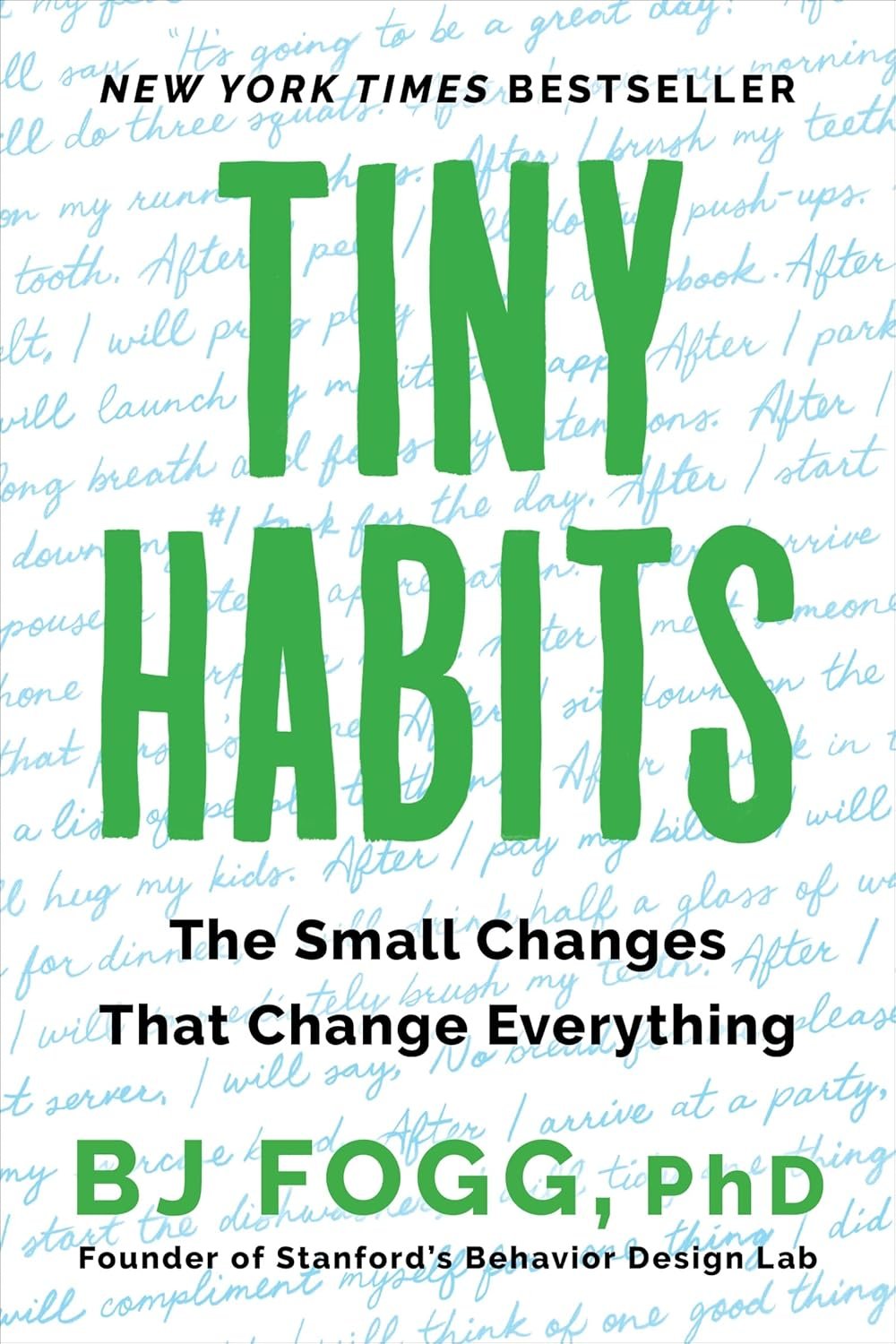
1. Tiny Habits by BJ Fogg
Tiny Habits is the most similar book to Atomic Habits on this list. BJ Fogg is a behavior scientist who has spent decades studying how habits form. He emphasizes starting small, celebrating wins, and designing your environment to make good habits easier.
This book is especially useful if you want to focus on the smallest possible changes that can lead to big results. Fogg's approach is gentle and practical, making it easy to implement his strategies in daily life.
Who it's for
Readers who want a science-backed, step-by-step guide to habit formation.
Why you'll like it
It provides a clear framework for creating new habits and breaking old ones, with an emphasis on starting small and building momentum.
Key lessons
- Start with tiny habits that are easy to do.
- Celebrate small wins to reinforce behavior.
- Design your environment to support your habits.
Pros
- Science-backed and research-driven.
- Practical exercises and examples.
- Focuses on positive reinforcement.
Cons
- Less comprehensive than Atomic Habits in terms of habit stacking and long-term strategy.
- Some readers may find the focus on small habits too simplistic.
My recommendation
Read this if you want a more scientific perspective on habit formation and enjoy a step-by-step approach to building new behaviors.
2. The Power of Habit by Charles Duhigg
If Atomic Habits is the practical field guide, The Power of Habit is the story-driven explanation of why habits run so much of our lives. Charles Duhigg popularized the habit loop: cue, routine, reward. Once you see that pattern, many behaviors stop feeling mysterious.
This book is especially useful if you want to understand the mechanics behind your behavior before changing it. Duhigg uses stories from individuals, companies, sports teams, and social movements, which makes the book feel broader than a simple productivity manual.
Who it's for
Readers who enjoy psychology, stories, and big-picture explanations of behavior change.
Why you'll like it
It gives you language for what Atomic Habits teaches in a more tactical way. You start noticing cues in your own life: the phone check after boredom, the snack after stress, the procrastination after an unclear task.
Key lessons
- Most habits follow a cue, routine, and reward pattern.
- Changing a habit often means keeping the cue and reward while replacing the routine.
- Organizations and cultures are also shaped by repeated behavior.
Pros
- Memorable stories make the science easy to understand.
- Excellent companion to Atomic Habits.
- Helpful for personal and professional behavior change.
Cons
- Less step-by-step than Atomic Habits.
- Some readers may want more exercises.
My recommendation
Read this next if you want to know why habits work. Then return to Atomic Habits for the practical implementation.
3. The Compound Effect by Darren Hardy
The Compound Effect has a very simple message: small choices, repeated consistently, create massive results. That is why it pairs so naturally with Atomic Habits. James Clear gives you the mechanics of habit design; Darren Hardy gives you a motivational push to respect the math of consistency.
This is not the most subtle book on the list, but it is highly useful when you feel impatient. It reminds you that transformation usually does not feel dramatic while it is happening. It feels like showing up again, making the better choice again, and letting time do its quiet work.
Who it's for
People who understand habit theory but need more urgency and discipline in daily execution.
Why you'll like it
It makes consistency feel valuable before results appear. That is a big deal, because many people quit good habits in the boring middle.
Key lessons
- Small actions can create large results when repeated long enough.
- Your daily choices are never neutral.
- Tracking behavior makes improvement visible.
Pros
- Direct, energetic, and easy to read.
- Great for rebuilding personal discipline.
- Strong reminder that consistency beats intensity.
Cons
- More motivational than research-heavy.
- The tone may feel intense for some readers.
My recommendation
Read this when you are tired of starting over. It is a good reset book for anyone who keeps chasing big bursts of motivation.
4. Deep Work by Cal Newport
Atomic Habits teaches you to design your environment. Deep Work shows why that matters so much for focus. Cal Newport argues that the ability to concentrate deeply is becoming rare and valuable. In a world full of notifications, shallow tasks, and constant switching, that idea feels more relevant every year.
This book is not only about productivity. It is about protecting your attention so your best habits have room to grow. You can have the perfect writing habit, study habit, or business routine, but if your attention is constantly broken, the habit never gets enough depth.
Who it's for
Students, creators, entrepreneurs, professionals, and anyone whose work depends on concentration.
Why you'll like it
It turns focus into a trainable skill. If Atomic Habits helps you start, Deep Work helps you stay with the work long enough to produce something meaningful.
Key lessons
- Focus is a competitive advantage.
- Shallow work can fill your day without moving your life forward.
- Rituals and boundaries make deep concentration easier.
Pros
- Highly practical for knowledge workers.
- Pairs well with habit tracking and time blocking.
- Encourages a healthier relationship with distraction.
Cons
- Some examples are work-focused rather than personal-life focused.
- Requires real lifestyle changes to apply fully.
My recommendation
Read this if your habits keep failing because your attention is scattered. For more context, see our Deep Work summary for entrepreneurs.
5. Essentialism by Greg McKeown
One reason people fail at habits is that they try to improve everything at once. Essentialism is the antidote. Greg McKeown argues that the path to a better life is not doing more things. It is doing the right things with more intention.
This book feels like a deep breath if your life is crowded with obligations, goals, plans, and open tabs. Atomic Habits gives you a method for making change easy. Essentialism helps you decide which changes deserve your energy in the first place.
Who it's for
Readers who feel busy, stretched thin, or pulled in too many directions.
Why you'll like it
It helps you stop treating every goal as equally important. That makes your habit system cleaner and more realistic.
Key lessons
- If everything matters, nothing gets enough attention.
- Saying no is a productivity skill.
- Clarity creates better execution.
Pros
- Calming, practical, and memorable.
- Great for people who overcommit.
- Works well with habit systems and weekly reviews.
Cons
- Less focused on habit science.
- Some advice requires uncomfortable decisions.
My recommendation
Read Essentialism before building a new habit stack. It will help you choose fewer habits and take them more seriously.
6. The 7 Habits of Highly Effective People by Stephen R. Covey
The 7 Habits of Highly Effective People is older and broader than Atomic Habits, but it remains one of the most useful personal-development books for building a life around principles. Covey is less interested in tiny behavior hacks and more interested in character, responsibility, priorities, and relationships.
If Atomic Habits helps you become consistent, The 7 Habits helps you ask whether you are being consistent in the right direction. That distinction matters. A strong routine is powerful, but a strong routine attached to the wrong priorities can simply make you more efficient at the wrong life.
Who it's for
Readers who want a complete framework for personal leadership and long-term effectiveness.
Why you'll like it
It gives your habits a larger purpose. Instead of only asking, "How do I repeat this behavior?" it asks, "What kind of person am I becoming?"
Key lessons
- Be proactive instead of reactive.
- Begin with the end in mind.
- Put first things first.
Pros
- Timeless and principle-driven.
- Useful for work, family, and personal growth.
- Deeper than many modern productivity books.
Cons
- Longer and denser than Atomic Habits.
- Some language feels more traditional.
My recommendation
Read this when you want your habits to serve a bigger life plan. You can also read our 7 Habits summary.
7. Indistractable by Nir Eyal
Bad habits are often attention habits. You intend to read, exercise, study, or work on your business, and then your phone quietly wins the afternoon. Indistractable is about reclaiming that space between intention and action.
Nir Eyal focuses on internal triggers, timeboxing, external distractions, and pacts. In Atomic Habits language, this book is especially good at helping you make bad habits difficult and good habits easier to protect.
Who it's for
People who lose time to phones, apps, email, notifications, and reactive work.
Why you'll like it
It does not simply blame technology. It asks what discomfort you are escaping when you reach for a distraction.
Key lessons
- Distraction often begins with an internal trigger.
- Planning your time makes distraction easier to spot.
- Technology should be configured around your values.
Pros
- Very relevant for modern readers.
- Practical tools for digital boundaries.
- Works well with Deep Work.
Cons
- Less about classic habit formation.
- Some ideas require cooperation from family or coworkers.
My recommendation
Read this if your biggest obstacle is not knowing what to do, but staying focused long enough to do it.
8. Mindset by Carol S. Dweck
Atomic Habits talks about identity-based habits: every action is a vote for the type of person you want to become. Mindset approaches that idea from another angle. Carol Dweck explains the difference between a fixed mindset and a growth mindset, and why your beliefs about ability shape your behavior.
This matters because many people do not fail at habits because they lack information. They fail because one bad day becomes evidence that they are "not disciplined" or "not that kind of person." A growth mindset makes the process less fragile.
Who it's for
Readers who struggle with perfectionism, self-doubt, or fear of looking bad while learning.
Why you'll like it
It changes how you interpret setbacks. Missing a workout or failing at a routine becomes feedback, not identity.
Key lessons
- Ability can be developed through effort, strategy, and feedback.
- Praise and labels can shape behavior in surprising ways.
- Growth requires becoming willing to be a beginner.
Pros
- Useful for parents, teachers, leaders, and learners.
- Strong complement to identity-based habit change.
- Encourages resilience after setbacks.
Cons
- Not a habit manual.
- Some examples may feel familiar if you already know the concept.
My recommendation
Read this if you often abandon habits after one imperfect week. It helps you stay in the learning process.
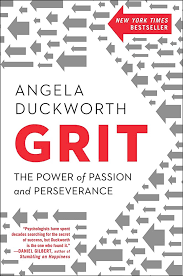
9. Grit by Angela Duckworth
Habits help you show up. Grit helps you keep showing up when the work is slow, uncertain, and not very glamorous. Angela Duckworth defines grit as a combination of passion and perseverance for long-term goals.
This book is valuable because personal transformation is rarely a 30-day project. The people who change their lives usually do not have perfect motivation. They have a reason to continue and enough structure to return after bad days.
Who it's for
Readers pursuing long-term goals in fitness, business, education, creativity, or career growth.
Why you'll like it
It explains why talent is not enough and why ordinary consistency can become extraordinary over time.
Key lessons
- Effort counts twice: it builds skill and turns skill into achievement.
- Long-term passion can be developed, not just discovered.
- Deliberate practice matters more than casual repetition.
Pros
- Research-informed and encouraging.
- Great for long-term goal setting.
- Useful when motivation fades.
Cons
- Less tactical for day-to-day habit design.
- Some readers may want more worksheets or exercises.
My recommendation
Read Grit when you need to think beyond quick wins. It is a strong reminder that meaningful change is often a long game.
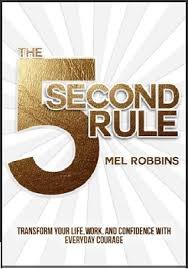
10. The 5 Second Rule by Mel Robbins
Atomic Habits is excellent for designing systems, but sometimes the problem is more immediate: you know what to do, and you still hesitate. The 5 Second Rule is built for that moment. Mel Robbins teaches a simple countdown technique to interrupt hesitation and move into action.
This book is best treated as an action trigger, not a complete life philosophy. It can help you start the workout, send the email, get out of bed, speak up, or take the next uncomfortable step before your mind talks you out of it.
Who it's for
Readers who procrastinate, overthink, or wait to feel ready before acting.
Why you'll like it
It is simple enough to remember in real life. That matters because complicated advice often disappears exactly when you need it.
Key lessons
- Action often comes before confidence.
- Hesitation gives fear time to grow.
- Small acts of courage build momentum.
Pros
- Easy to apply immediately.
- Good for procrastination and avoidance.
- Complements habit systems well.
Cons
- Built around one core idea.
- Not as comprehensive as Atomic Habits.
My recommendation
Read this if your main problem is starting. Pair it with Atomic Habits to turn those first actions into repeatable routines.
Atomic Habits vs Tiny Habits
Atomic Habits and Tiny Habits are often mentioned together because both books take small behavior seriously. The difference is emphasis.
Atomic Habits is broader. It covers identity, environment design, habit stacking, cues, rewards, tracking, and the long-term effect of small improvements. It feels like a complete operating system for behavior change.
Tiny Habits by BJ Fogg is more focused on behavior design at the smallest possible level. It is especially good if you want to make a habit so tiny that it becomes almost impossible to fail. Think flossing one tooth, doing two pushups, or writing one sentence.
My view: Atomic Habits is the better first read for most people. Tiny Habits is the better book when you keep making your habits too big and need to learn the art of starting smaller.
Atomic Habits vs The Power of Habit
The Power of Habit explains habits. Atomic Habits helps you build them.
Charles Duhigg's book is stronger on storytelling and the science of habit loops. James Clear's book is stronger on practical application. If you enjoy case studies and want to understand why behavior repeats, choose The Power of Habit. If you want a checklist for changing your own behavior, choose Atomic Habits.
The best answer is to read both. Read Atomic Habits when you want to act. Read The Power of Habit when you want to understand the pattern underneath the action.
Which Book Should You Read Next?
If you want the closest direct follow-up to Atomic Habits, read The Power of Habit. If you need motivation to stay consistent, read The Compound Effect. If your habits are failing because of distraction, read Deep Work or Indistractable.
If your real problem is overwhelm, start with Essentialism. If you want a bigger life philosophy, choose The 7 Habits of Highly Effective People. If you give up after setbacks, read Mindset or Grit.
My personal reading order would be: The Power of Habit, Essentialism, Deep Work, The Compound Effect, and then The 7 Habits. That path gives you science, clarity, focus, consistency, and principles.