Zero to One Summary for Entrepreneurs (Building Monopoly Businesses That Win)
Most startups try to compete.
Few try to dominate.
When I first read Zero to One, I realized it wasn't about improving existing ideas — it was about creating entirely new categories.
Written by Peter Thiel, Zero to One challenges entrepreneurs to stop copying and start inventing.
This isn't just a startup book. It's a blueprint for building businesses that go from zero to one — not from one to many.
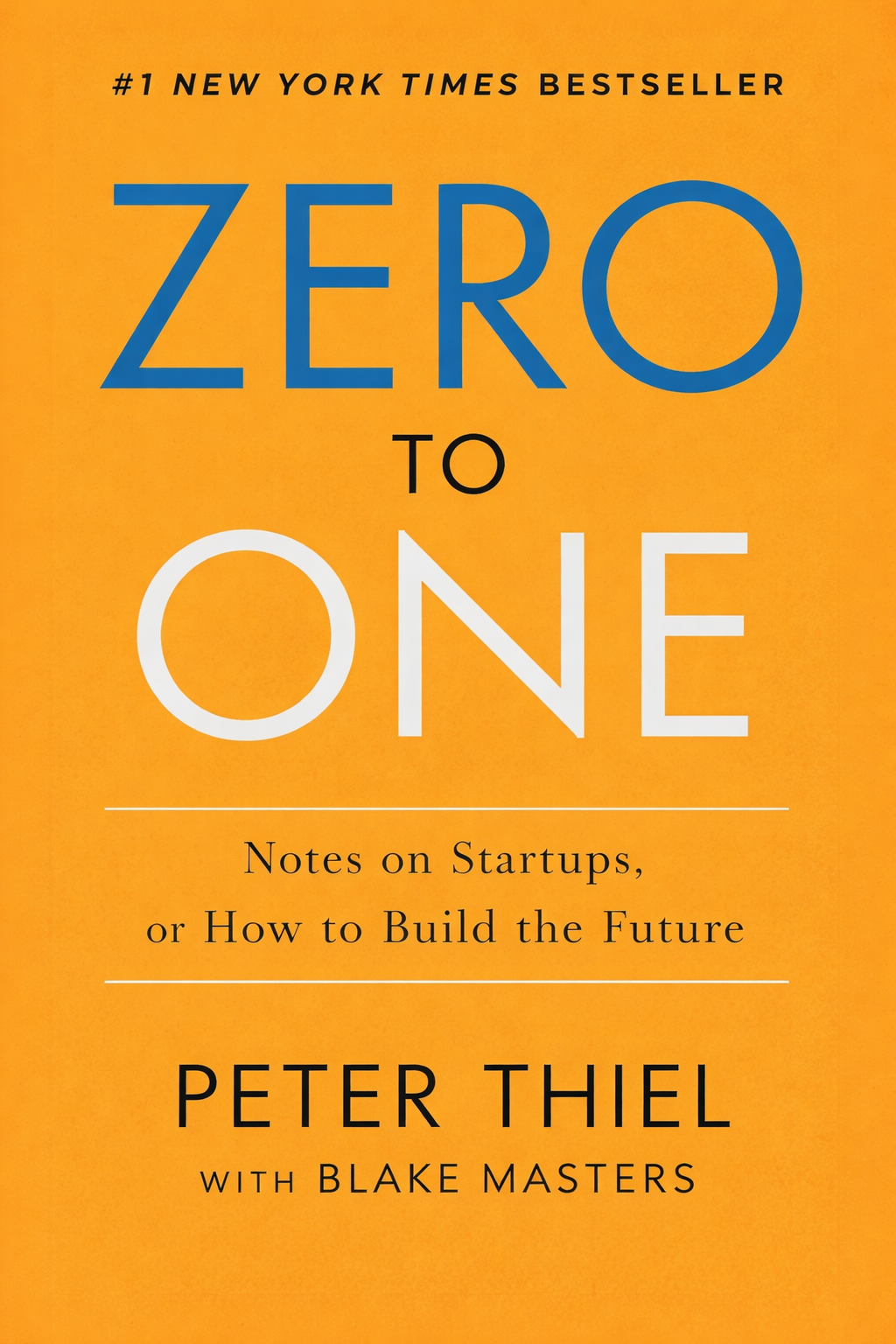
What Is Zero to One About?
Peter Thiel argues that true innovation happens when you create something entirely new.
Zero to One = Creating something new.
One to N = Expanding something that already exists.
Progress doesn't come from competition. It comes from monopoly-level innovation.
Core Lessons Explained for Entrepreneurs
1. Competition Is for Losers
Most startups fight for market share.
Thiel argues that intense competition destroys profits.
The goal isn't to be slightly better. The goal is to be so different that you have no real competition.
Entrepreneurs should aim to build monopolies — businesses that dominate a niche before expanding.
2. Build Monopoly Businesses
A monopoly business:
- Solves a unique problem
- Has strong differentiation
- Commands pricing power
- Is difficult to replicate
Start small. Dominate a niche. Then scale strategically.
3. Secrets Matter
Great businesses are built on secrets — insights others don't see.
What important truth do very few people agree with you on?
Unique insight creates unique companies.
4. The Power Law
Venture returns follow a power law: a small number of companies generate most results.
Entrepreneurs should focus on building something capable of massive impact — not incremental growth.
5. Sales and Distribution Matter
Many founders obsess over product quality.
But if you build it, customers won't automatically come.
Distribution strategy is as important as product innovation.
How Zero to One Applies in 2026
Today's opportunities include:
- AI-native startups
- Micro-SaaS businesses
- Vertical software tools
- Creator-led platforms
- Digital-first products
Entrepreneurs must avoid building “me-too” products.
Innovation still beats imitation.
Zero to One vs The Lean Startup
Zero to One teaches what to build.
The Lean Startup Summary for Entrepreneurs teaches how to test and validate it.
One focuses on differentiation. The other focuses on iteration.
Together, they form a powerful startup strategy.
And once your strategy is clear, building consistent execution systems becomes critical. That's where Atomic Habits Summary for Entrepreneurs helps you develop discipline that compounds over time.
Who Should Read Zero to One?
- Startup founders
- Tech entrepreneurs
- Product builders
- Investors
- Anyone building innovative companies
If you want to build something truly different, this book is essential.
Key Quotes
“Competition is for losers.”
“Every moment in business happens only once.”
Action Plan for Entrepreneurs
- Identify a niche you can dominate.
- Find a problem competitors ignore.
- Build strong differentiation.
- Create a clear distribution strategy.
- Think long-term monopoly, not short-term competition.
Move from zero to one — not from one to many.