10 Best Books Like The Lean Startup for Building Smarter Businesses
The Lean Startup became popular because it gave founders a disciplined way to learn before they ran out of time, money, or patience. But the book is only the beginning. If you liked the build-measure-learn loop, the next useful books should help you ask better customer questions, design better experiments, position the product clearly, and lead the company after early validation.
This guide follows the Book Readers Hub standard: useful recommendations, honest limitations, quick picks for busy readers, and enough detail to help you choose the right next book without opening ten tabs.
Quick Picks
- Best overall follow-up: The Mom Test
- Best hands-on startup playbook: Running Lean
- Best for product teams: Inspired
- Best for scaling focus: Measure What Matters
Comparison Table
| Book | Best For | Why It Stands Out |
|---|---|---|
| 1. The Mom Test | Customer interviews that reveal real behavior | Founders who keep hearing polite praise but not real commitment. |
| 2. Running Lean | Mapping assumptions and planning experiments | Early-stage founders who want structure without getting buried. |
| 3. The Startup Owner's Manual | Customer development and repeatable business models | Founders who want a detailed reference guide. |
| 4. Inspired | Building products customers love | Product managers, founders, designers, and engineers working together. |
| 5. Testing Business Ideas | Choosing the right experiment for the risk | Teams that know they need evidence but are unsure what experiment to run. |
| 6. Obviously Awesome | Positioning products so customers understand them | Founders and marketers revising a pitch, landing page, or sales narrative. |
| 7. Continuous Discovery Habits | Making customer learning a weekly habit | Teams with regular customer access. |
| 8. Hooked | Repeat engagement and product habit loops | Consumer product builders and app teams. |
| 9. Measure What Matters | OKRs and focused execution | Teams that have too many goals and not enough clarity. |
| 10. Rework | Simple, profitable, low-waste business thinking | Small teams, creators, and bootstrapped founders. |
How I Chose These Books
I looked for books that have a durable reason to be recommended: a useful framework, a memorable story, a strong reputation among readers, or a perspective that adds something new to the topic. I avoided filling the list with near-duplicates, because ten books that say the same thing do not help you choose.
I also considered readability. These articles are meant for real readers, including mobile readers, so each recommendation explains who the book is for, why it works, and where it may not be the best fit. A good book list should save you time, not just create a longer wishlist.
1. The Mom Test by Rob Fitzpatrick
The Mom Test earns its place here because it is strong for customer interviews that reveal real behavior. It makes the learn part of The Lean Startup much more reliable by showing how not to lead the witness.
Who it's for
Founders who keep hearing polite praise but not real commitment.
Why you'll like it
You will like it if you want a book with a clear point of view rather than a title that is famous for vague reasons. It gives you enough story, evidence, or practical framing to remember the idea after you close the book.
Key lessons
- Ask about the customer's life, not your idea.
- Compliments are weak evidence.
- Specific past behavior is more useful than future promises.
Pros
- Short, sharp, and practical.
- Useful before every customer call.
Cons
- Focused mainly on interviews.
- Not a full product strategy book.
My recommendation
Start here if validation currently feels fuzzy. If you are choosing between several books on this page, read a sample first and notice which voice makes you want to keep going. The best recommendation is the one you will actually finish and use.
2. Running Lean by Ash Maurya
Running Lean earns its place here because it is strong for mapping assumptions and planning experiments. It turns lean thinking into a more step-by-step founder workflow.
Who it's for
Early-stage founders who want structure without getting buried.
Why you'll like it
You will like it if you want a book with a clear point of view rather than a title that is famous for vague reasons. It gives you enough story, evidence, or practical framing to remember the idea after you close the book.
Key lessons
- Document assumptions.
- Test riskiest assumptions first.
- Traction beats internal excitement.
Pros
- Very practical.
- Helpful templates and sequence.
Cons
- Can become mechanical if used without judgment.
- Best for early-stage ideas.
My recommendation
Use it as your operating manual for the first serious validation cycle. If you are choosing between several books on this page, read a sample first and notice which voice makes you want to keep going. The best recommendation is the one you will actually finish and use.
3. The Startup Owner's Manual by Steve Blank and Bob Dorf
The Startup Owner's Manual earns its place here because it is strong for customer development and repeatable business models. It expands the lean startup toolkit with depth around channels, discovery, and sales learning.
Who it's for
Founders who want a detailed reference guide.
Why you'll like it
You will like it if you want a book with a clear point of view rather than a title that is famous for vague reasons. It gives you enough story, evidence, or practical framing to remember the idea after you close the book.
Key lessons
- Startups search before they execute.
- Customer development is a process.
- A business model has many testable parts.
Pros
- Comprehensive and serious.
- Excellent for committed founders.
Cons
- Dense and not casual reading.
- Best read selectively.
My recommendation
Keep it nearby as a reference instead of trying to finish it in one sitting. If you are choosing between several books on this page, read a sample first and notice which voice makes you want to keep going. The best recommendation is the one you will actually finish and use.
4. Inspired by Marty Cagan
Inspired earns its place here because it is strong for building products customers love. It connects lean learning to product craft, team structure, discovery, and delivery.
Who it's for
Product managers, founders, designers, and engineers working together.
Why you'll like it
You will like it if you want a book with a clear point of view rather than a title that is famous for vague reasons. It gives you enough story, evidence, or practical framing to remember the idea after you close the book.
Key lessons
- Product teams solve outcomes, not ticket lists.
- Discovery reduces product risk.
- Strong teams need trust and context.
Pros
- Excellent for product organizations.
- Practical and opinionated.
Cons
- Assumes a mature product environment.
- Some advice is harder for tiny teams.
My recommendation
Read it when your experiments need to become a product practice. If you are choosing between several books on this page, read a sample first and notice which voice makes you want to keep going. The best recommendation is the one you will actually finish and use.
5. Testing Business Ideas by David J. Bland and Alex Osterwalder
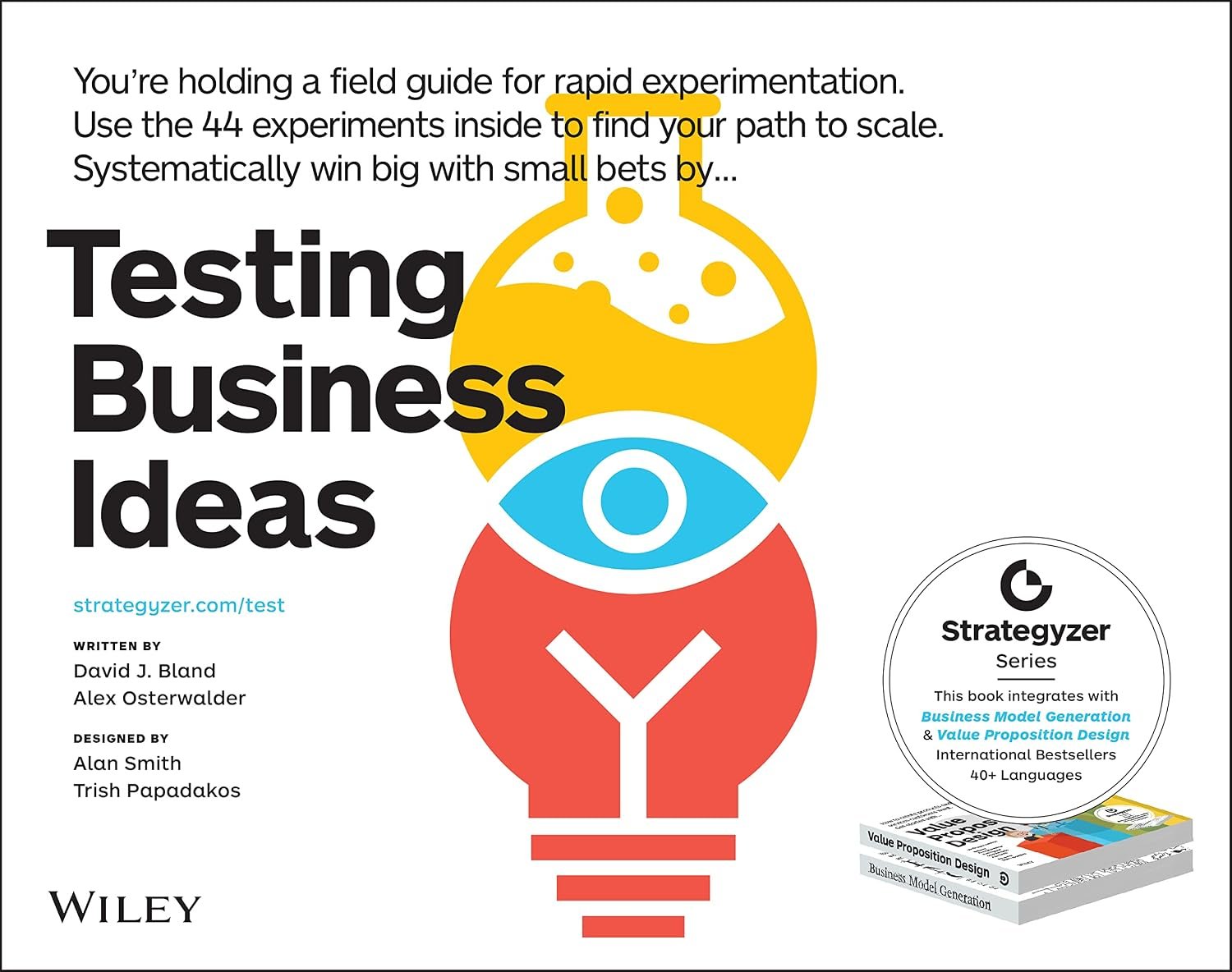
Testing Business Ideas earns its place here because it is strong for choosing the right experiment for the risk. It gives teams a broader menu of tests than landing pages and surveys.
Who it's for
Teams that know they need evidence but are unsure what experiment to run.
Why you'll like it
You will like it if you want a book with a clear point of view rather than a title that is famous for vague reasons. It gives you enough story, evidence, or practical framing to remember the idea after you close the book.
Key lessons
- Different risks need different tests.
- Cheap evidence should come before expensive building.
- Experiments need clear pass/fail criteria.
Pros
- Visual and practical.
- Useful workshop reference.
Cons
- Less narrative.
- Best with active projects.
My recommendation
Use it when the team agrees to test but keeps choosing weak tests. If you are choosing between several books on this page, read a sample first and notice which voice makes you want to keep going. The best recommendation is the one you will actually finish and use.
6. Obviously Awesome by April Dunford
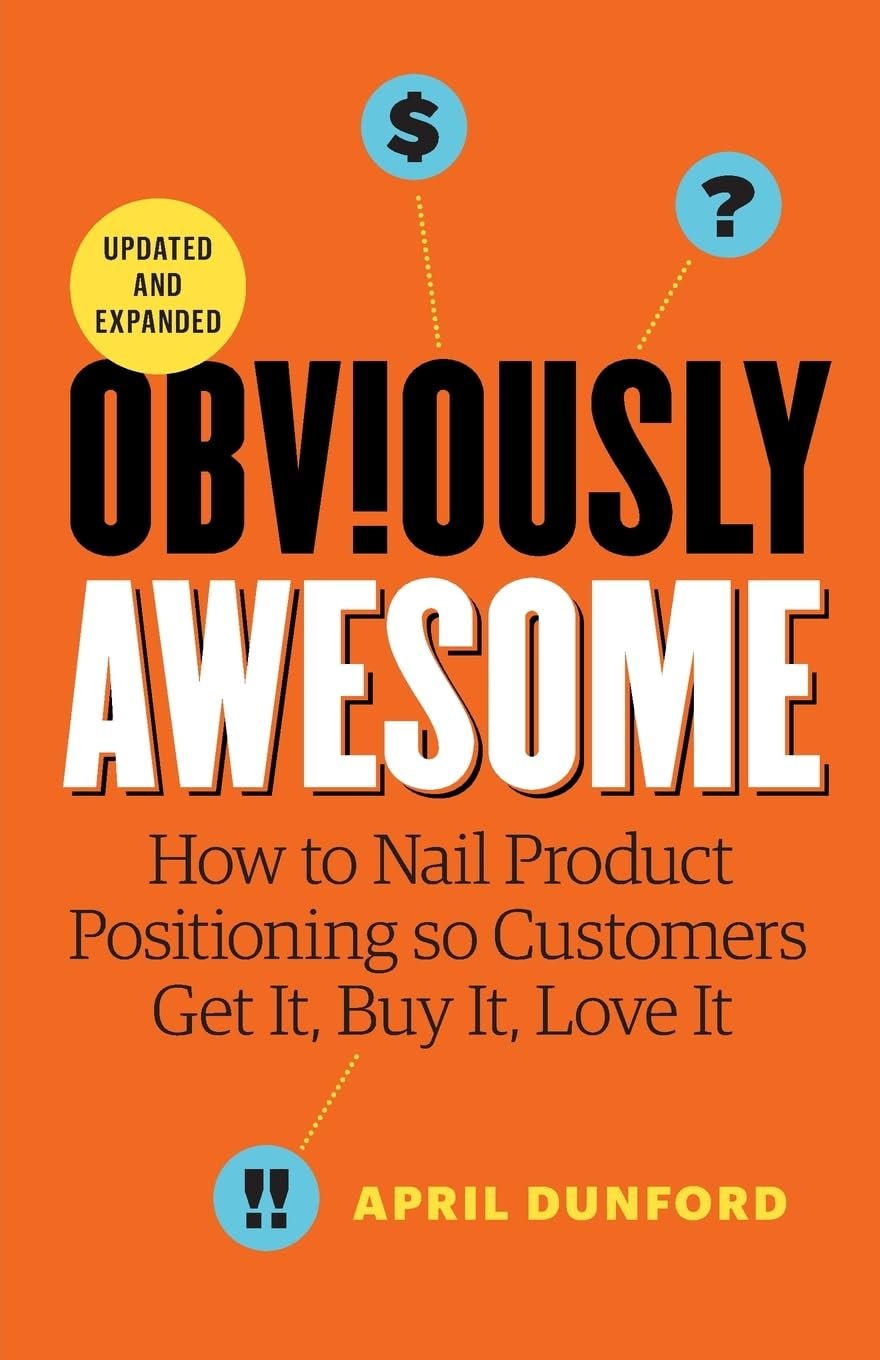
Obviously Awesome earns its place here because it is strong for positioning products so customers understand them. Many lean tests fail because the offer is confusing; this book fixes that problem directly.
Who it's for
Founders and marketers revising a pitch, landing page, or sales narrative.
Why you'll like it
You will like it if you want a book with a clear point of view rather than a title that is famous for vague reasons. It gives you enough story, evidence, or practical framing to remember the idea after you close the book.
Key lessons
- Customers compare you to alternatives.
- Positioning is context-setting.
- Clarity can unlock demand.
Pros
- Highly actionable.
- Great for B2B and SaaS.
Cons
- Narrowly focused on positioning.
- Less about discovery.
My recommendation
Read it before assuming the product is wrong; the explanation may be wrong. If you are choosing between several books on this page, read a sample first and notice which voice makes you want to keep going. The best recommendation is the one you will actually finish and use.
7. Continuous Discovery Habits by Teresa Torres
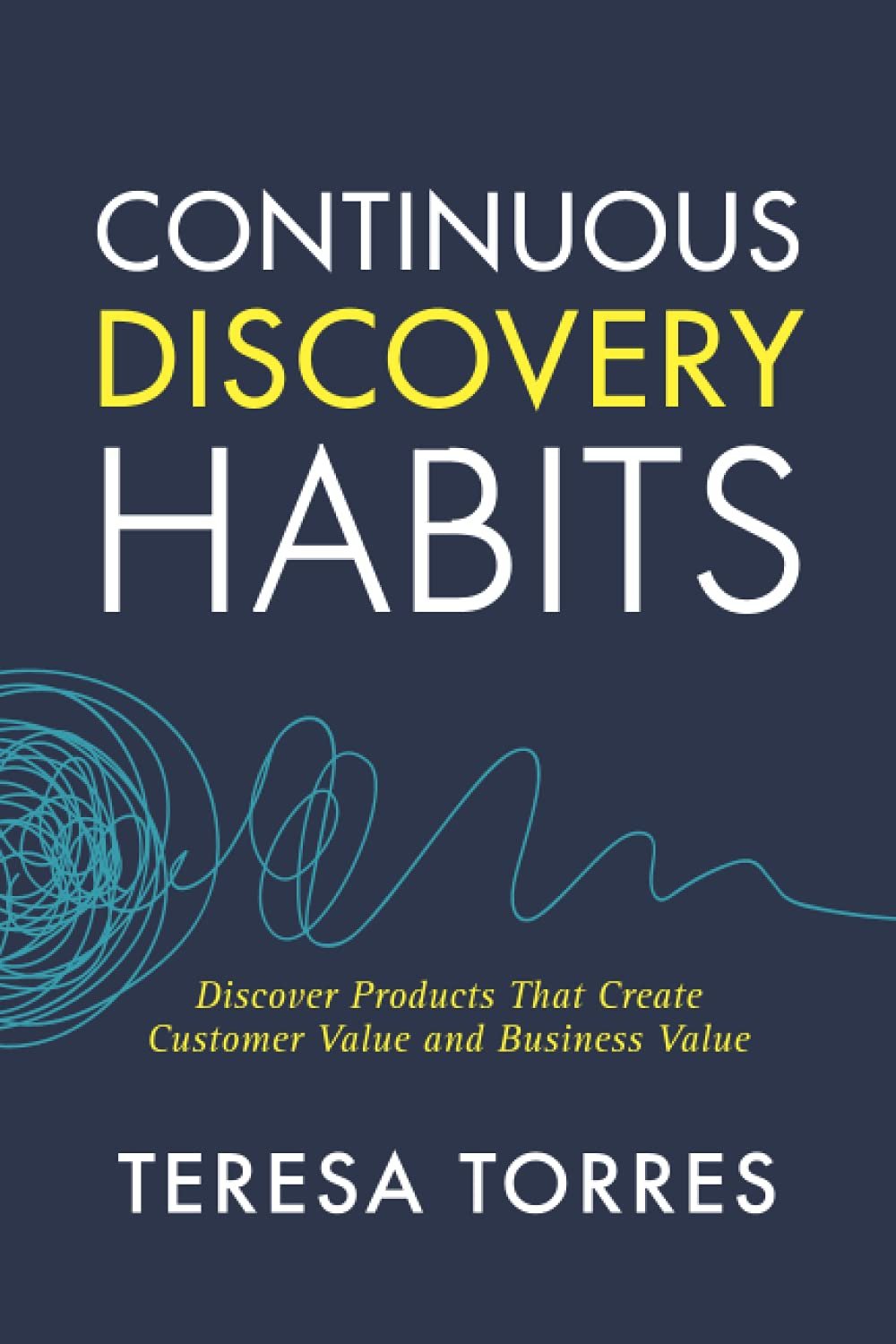
Continuous Discovery Habits earns its place here because it is strong for making customer learning a weekly habit. It helps product teams keep discovery alive after launch rather than treating research as a one-time phase.
Who it's for
Teams with regular customer access.
Why you'll like it
You will like it if you want a book with a clear point of view rather than a title that is famous for vague reasons. It gives you enough story, evidence, or practical framing to remember the idea after you close the book.
Key lessons
- Talk to customers continuously.
- Map opportunities before solutions.
- Decisions improve with steady evidence.
Pros
- Modern and practical.
- Strong for teams.
Cons
- Requires access to customers.
- Needs organizational support.
My recommendation
Read it if discovery disappears whenever delivery pressure rises. If you are choosing between several books on this page, read a sample first and notice which voice makes you want to keep going. The best recommendation is the one you will actually finish and use.
8. Hooked by Nir Eyal
Hooked earns its place here because it is strong for repeat engagement and product habit loops. It helps teams think about why users return, though it should be used responsibly.
Who it's for
Consumer product builders and app teams.
Why you'll like it
You will like it if you want a book with a clear point of view rather than a title that is famous for vague reasons. It gives you enough story, evidence, or practical framing to remember the idea after you close the book.
Key lessons
- Triggers start behavior.
- Variable rewards can reinforce use.
- Investment increases future engagement.
Pros
- Memorable framework.
- Useful for product critique.
Cons
- Engagement is not the same as value.
- Ethical use matters.
My recommendation
Read it as a design lens, not as permission to manipulate attention. If you are choosing between several books on this page, read a sample first and notice which voice makes you want to keep going. The best recommendation is the one you will actually finish and use.
9. Measure What Matters by John Doerr
Measure What Matters earns its place here because it is strong for OKRs and focused execution. It helps validated learning become aligned execution once a team grows.
Who it's for
Teams that have too many goals and not enough clarity.
Why you'll like it
You will like it if you want a book with a clear point of view rather than a title that is famous for vague reasons. It gives you enough story, evidence, or practical framing to remember the idea after you close the book.
Key lessons
- Objectives should be meaningful.
- Key results should be measurable.
- Alignment reduces wasted effort.
Pros
- Simple and influential.
- Helpful for teams.
Cons
- Bad OKRs create busywork.
- Examples can feel uneven.
My recommendation
Read it when experiments are happening but priorities are scattered. If you are choosing between several books on this page, read a sample first and notice which voice makes you want to keep going. The best recommendation is the one you will actually finish and use.
10. Rework by Jason Fried and David Heinemeier Hansson
Rework earns its place here because it is strong for simple, profitable, low-waste business thinking. It is a useful counterweight to startup complexity and obsession with scale.
Who it's for
Small teams, creators, and bootstrapped founders.
Why you'll like it
You will like it if you want a book with a clear point of view rather than a title that is famous for vague reasons. It gives you enough story, evidence, or practical framing to remember the idea after you close the book.
Key lessons
- Do less, better.
- Constraints create focus.
- Meetings and bloat are expensive.
Pros
- Fast, punchy, and practical.
- Good for mobile readers.
Cons
- Aphoristic rather than deeply argued.
- Not every principle fits every market.
My recommendation
Read it when startup advice starts making your business heavier than it needs to be. If you are choosing between several books on this page, read a sample first and notice which voice makes you want to keep going. The best recommendation is the one you will actually finish and use.
Which Book Should You Read Next?
Read The Mom Test next if you have not yet spoken to customers in a useful way. Read Running Lean if you want a more structured operating path from idea to test. If two books are competing for your attention, choose the one that matches your current problem, not the one with the biggest reputation. Reading at the right moment is often what makes a book feel transformative.