10 Best Books Like Zero to One for Ambitious Founders
Zero to One is not really a book about startups in the narrow sense. It is a book about original thinking. Peter Thiel pushes founders to ask whether they are building something new or simply competing inside a crowded category. The best follow-up books should not repeat that idea. They should help you test it, operate it, sell it, and survive the parts of company-building that a sharp philosophy cannot solve by itself.
This guide follows the Book Readers Hub standard: useful recommendations, honest limitations, quick picks for busy readers, and enough detail to help you choose the right next book without opening ten tabs.
Quick Picks
- Best overall follow-up: The Hard Thing About Hard Things
- Best for customer discovery: The Mom Test
- Best for market strategy: Blue Ocean Strategy
- Best for operating discipline: Good to Great
Comparison Table
| Book | Best For | Why It Stands Out |
|---|---|---|
| 1. The Hard Thing About Hard Things | The messy operating reality after the big idea | Founders and operators who want candor instead of startup theatre. |
| 2. The Mom Test | Customer conversations that produce evidence | Early founders, indie hackers, and product people who need better customer interviews. |
| 3. Blue Ocean Strategy | Creating uncontested market space | Teams stuck in crowded categories or comparison-heavy markets. |
| 4. Good to Great | Disciplined company-building | Readers who want to understand why some companies become unusually resilient. |
| 5. The Innovator's Dilemma | Why strong incumbents miss disruption | Founders entering markets with powerful incumbents. |
| 6. The Lean Startup | Validated learning and fast experiments | Early-stage teams deciding what to test next. |
| 7. The E-Myth Revisited | Building systems instead of owning a job | Small business owners and solo founders who feel trapped in daily work. |
| 8. The Everything Store | Ambition, scale, and relentless customer focus | Readers who like company biographies with strategic lessons. |
| 9. Measure What Matters | Turning ambition into aligned goals | Growing teams that need shared priorities. |
| 10. The Almanack of Naval Ravikant | Judgment, leverage, ownership, and independent thinking | Founders who want strategic perspective beyond startup tactics. |
How I Chose These Books
I looked for books that have a durable reason to be recommended: a useful framework, a memorable story, a strong reputation among readers, or a perspective that adds something new to the topic. I avoided filling the list with near-duplicates, because ten books that say the same thing do not help you choose.
I also considered readability. These articles are meant for real readers, including mobile readers, so each recommendation explains who the book is for, why it works, and where it may not be the best fit. A good book list should save you time, not just create a longer wishlist.
1. The Hard Thing About Hard Things by Ben Horowitz
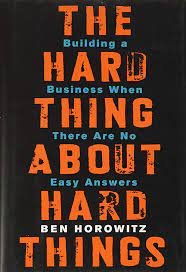
The Hard Thing About Hard Things earns its place here because it is strong for the messy operating reality after the big idea. It gives Zero to One a reality check: hiring, firing, culture, fear, and decisions where no neat framework saves you.
Who it's for
Founders and operators who want candor instead of startup theatre.
Why you'll like it
You will like it if you want a book with a clear point of view rather than a title that is famous for vague reasons. It gives you enough story, evidence, or practical framing to remember the idea after you close the book.
Key lessons
- Leadership is tested when choices are ugly.
- Culture is shaped by what leaders tolerate.
- There is no substitute for judgment under pressure.
Pros
- Honest, memorable, and practical.
- Excellent for founders past the idea stage.
Cons
- Some examples are specific to venture-backed tech.
- It is not a simple checklist.
My recommendation
Read it when you need to understand what building a company feels like after the pitch deck. If you are choosing between several books on this page, read a sample first and notice which voice makes you want to keep going. The best recommendation is the one you will actually finish and use.
2. The Mom Test by Rob Fitzpatrick
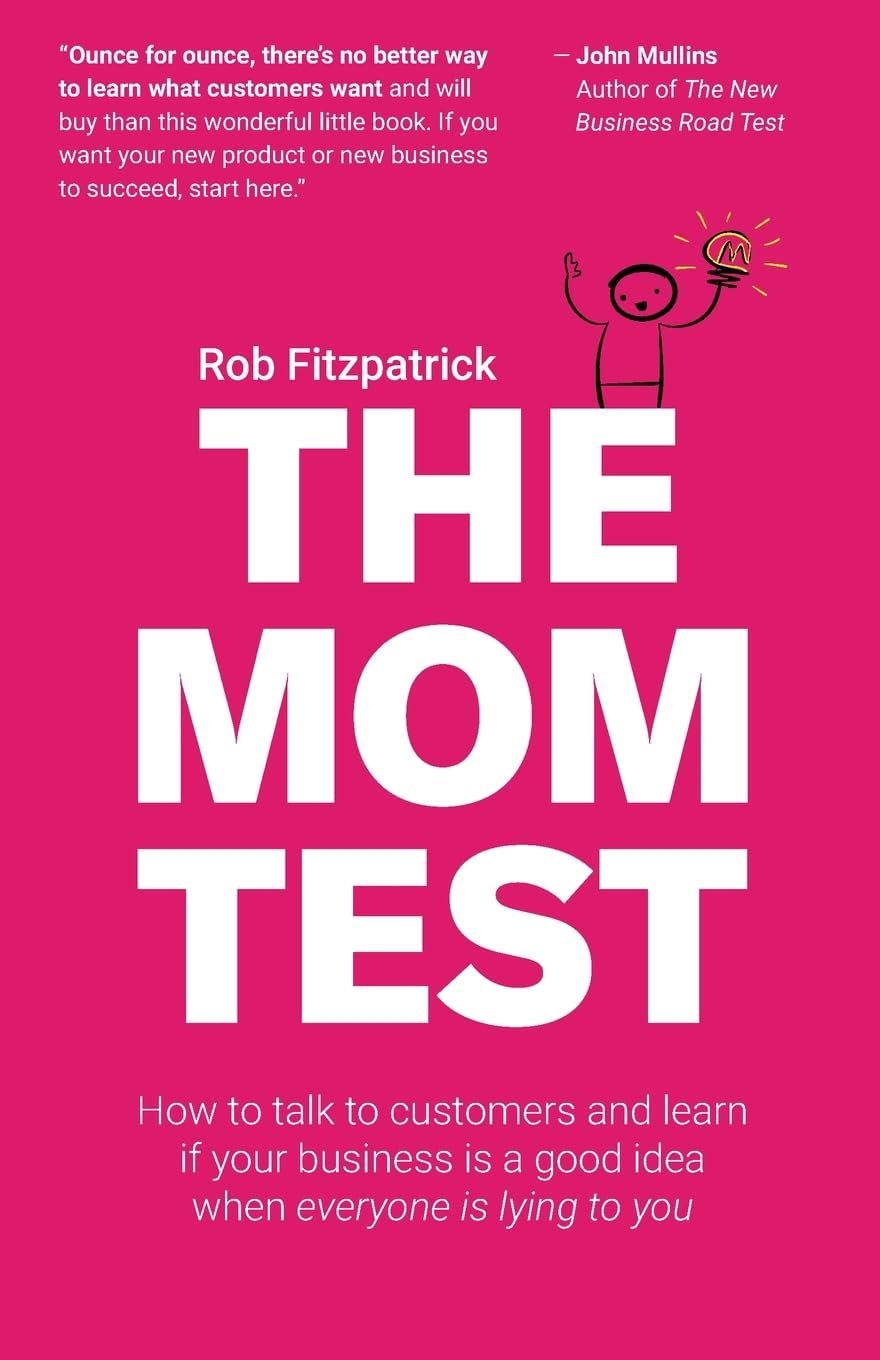
The Mom Test earns its place here because it is strong for customer conversations that produce evidence. Zero to One asks you to build something valuable. The Mom Test helps you stop mistaking compliments for validation.
Who it's for
Early founders, indie hackers, and product people who need better customer interviews.
Why you'll like it
You will like it if you want a book with a clear point of view rather than a title that is famous for vague reasons. It gives you enough story, evidence, or practical framing to remember the idea after you close the book.
Key lessons
- Ask about past behavior, not opinions.
- Bad questions create false confidence.
- Customers reveal truth through actions and constraints.
Pros
- Short and immediately useful.
- Changes how you talk to potential customers.
Cons
- Narrow by design.
- Does not replace product testing.
My recommendation
Read it before you build another feature based only on enthusiasm. If you are choosing between several books on this page, read a sample first and notice which voice makes you want to keep going. The best recommendation is the one you will actually finish and use.
3. Blue Ocean Strategy by W. Chan Kim and Renee Mauborgne
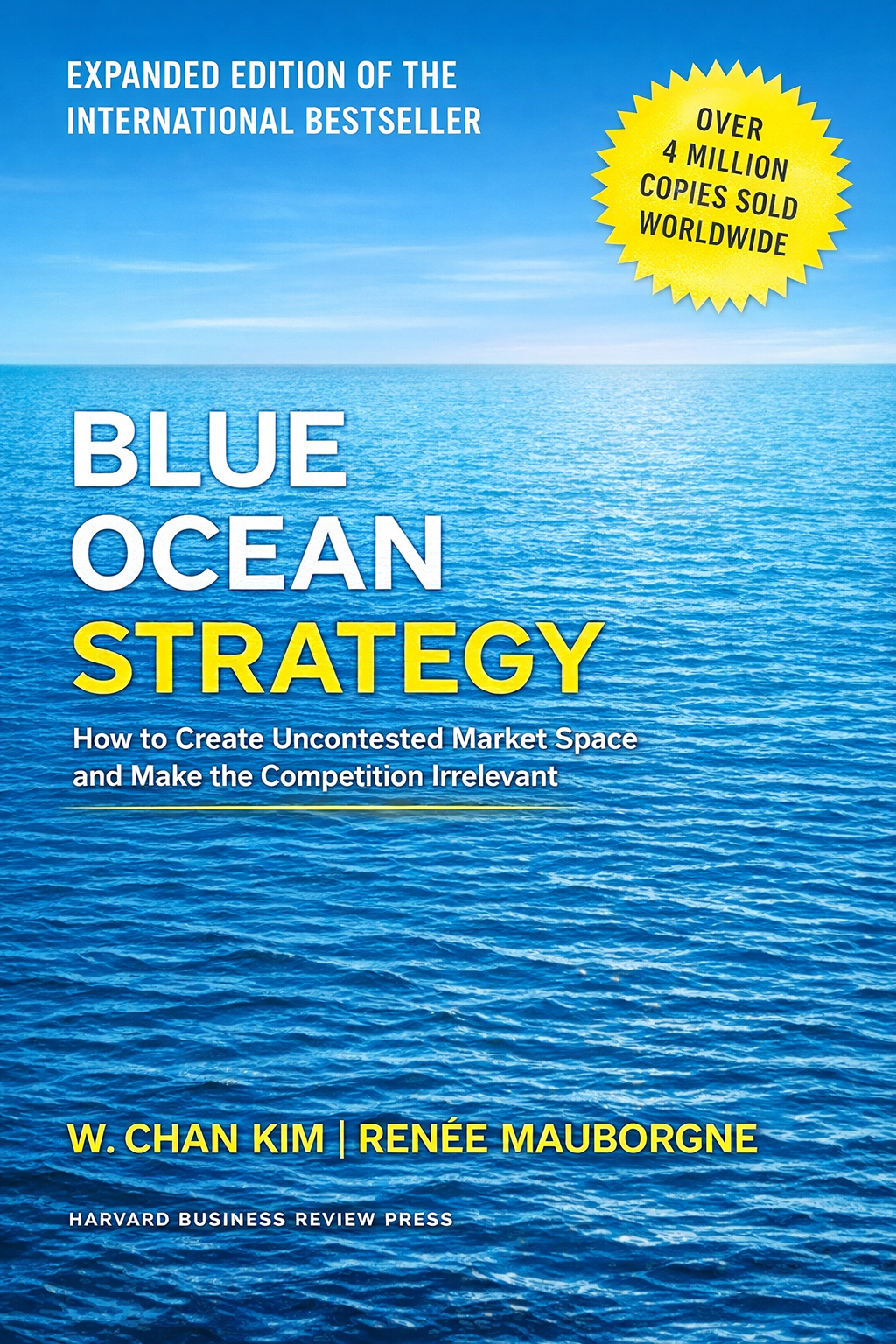
Blue Ocean Strategy earns its place here because it is strong for creating uncontested market space. Its value innovation framework makes differentiation more concrete than a vague instruction to be unique.
Who it's for
Teams stuck in crowded categories or comparison-heavy markets.
Why you'll like it
You will like it if you want a book with a clear point of view rather than a title that is famous for vague reasons. It gives you enough story, evidence, or practical framing to remember the idea after you close the book.
Key lessons
- Competing on the same factors traps you.
- Value can be raised and reduced at the same time.
- The best strategy changes the basis of comparison.
Pros
- Strong frameworks and memorable diagrams.
- Helpful for positioning conversations.
Cons
- Case studies can make execution look cleaner than reality.
- Best paired with customer evidence.
My recommendation
Read it when your offer sounds too similar to everyone else's. If you are choosing between several books on this page, read a sample first and notice which voice makes you want to keep going. The best recommendation is the one you will actually finish and use.
4. Good to Great by Jim Collins
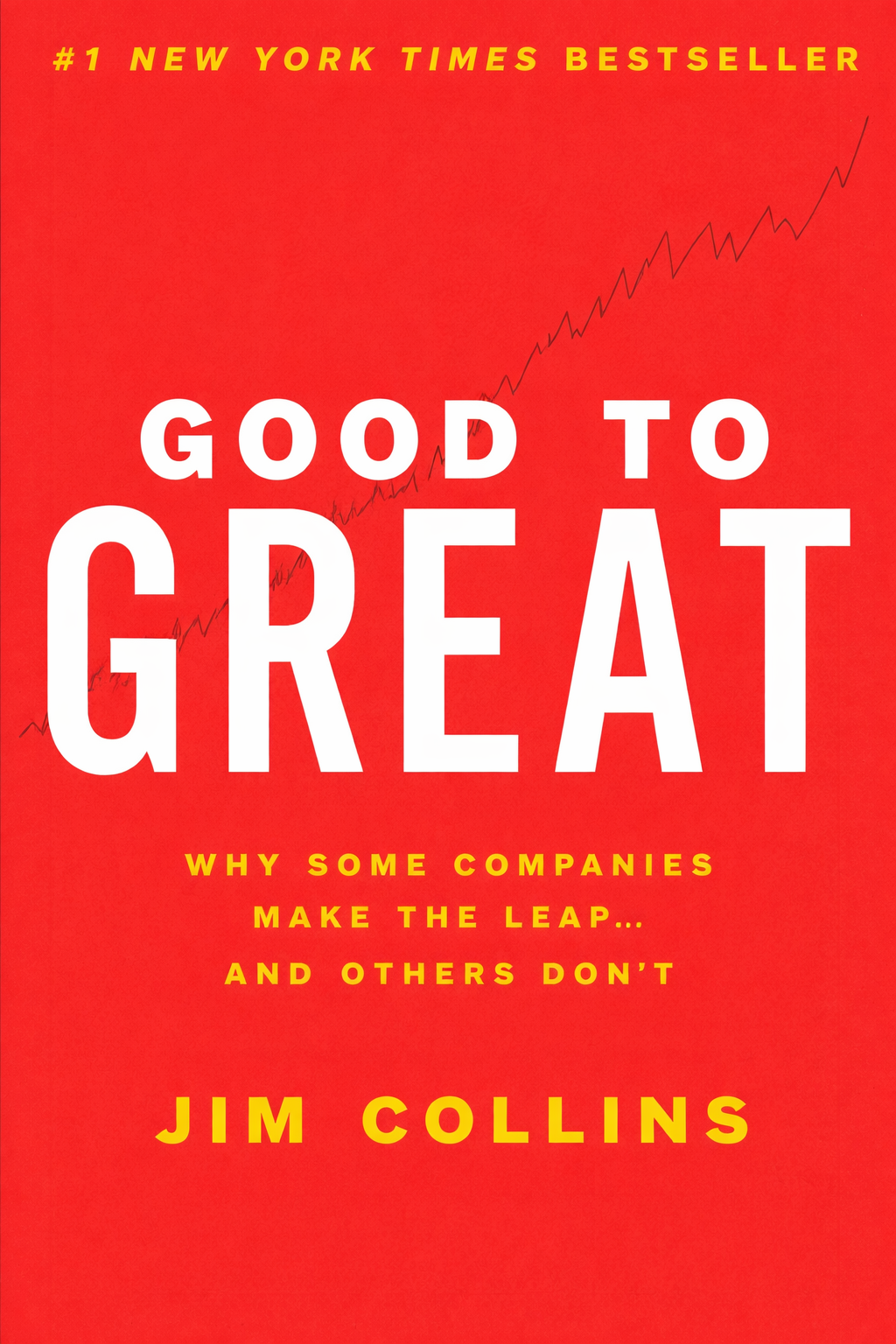
Good to Great earns its place here because it is strong for disciplined company-building. It shifts the conversation from clever ideas to durable excellence, leadership, focus, and sustained execution.
Who it's for
Readers who want to understand why some companies become unusually resilient.
Why you'll like it
You will like it if you want a book with a clear point of view rather than a title that is famous for vague reasons. It gives you enough story, evidence, or practical framing to remember the idea after you close the book.
Key lessons
- Greatness requires disciplined people and thought.
- Focus beats scattered ambition.
- Momentum compounds through consistent choices.
Pros
- Clear concepts that leaders still discuss.
- Useful beyond startups.
Cons
- Research method has been debated.
- Examples reflect a particular era.
My recommendation
Use it as a leadership lens, not as an infallible formula. If you are choosing between several books on this page, read a sample first and notice which voice makes you want to keep going. The best recommendation is the one you will actually finish and use.
5. The Innovator's Dilemma by Clayton M. Christensen
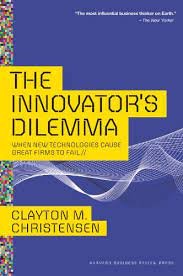
The Innovator's Dilemma earns its place here because it is strong for why strong incumbents miss disruption. It explains the opening that many Zero to One-style startups exploit: good companies can ignore emerging markets for rational reasons.
Who it's for
Founders entering markets with powerful incumbents.
Why you'll like it
You will like it if you want a book with a clear point of view rather than a title that is famous for vague reasons. It gives you enough story, evidence, or practical framing to remember the idea after you close the book.
Key lessons
- Disruption often starts where margins look unattractive.
- Incumbents are constrained by their best customers.
- New markets require different measures of progress.
Pros
- Foundational business thinking.
- Excellent strategic vocabulary.
Cons
- Some examples are dated.
- Requires interpretation for modern software markets.
My recommendation
Read it to understand why a small entrant can matter. If you are choosing between several books on this page, read a sample first and notice which voice makes you want to keep going. The best recommendation is the one you will actually finish and use.
6. The Lean Startup by Eric Ries
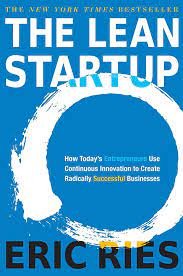
The Lean Startup earns its place here because it is strong for validated learning and fast experiments. It balances Zero to One's conviction with disciplined learning so founders do not build in isolation.
Who it's for
Early-stage teams deciding what to test next.
Why you'll like it
You will like it if you want a book with a clear point of view rather than a title that is famous for vague reasons. It gives you enough story, evidence, or practical framing to remember the idea after you close the book.
Key lessons
- Build-measure-learn is a learning loop.
- MVPs test assumptions, not ego.
- Learning speed matters.
Pros
- Practical and influential.
- Good for reducing waste.
Cons
- Can be misused to justify timid products.
- Needs judgment around quality.
My recommendation
Read it when you need to turn a contrarian idea into evidence. If you are choosing between several books on this page, read a sample first and notice which voice makes you want to keep going. The best recommendation is the one you will actually finish and use.
7. The E-Myth Revisited by Michael E. Gerber
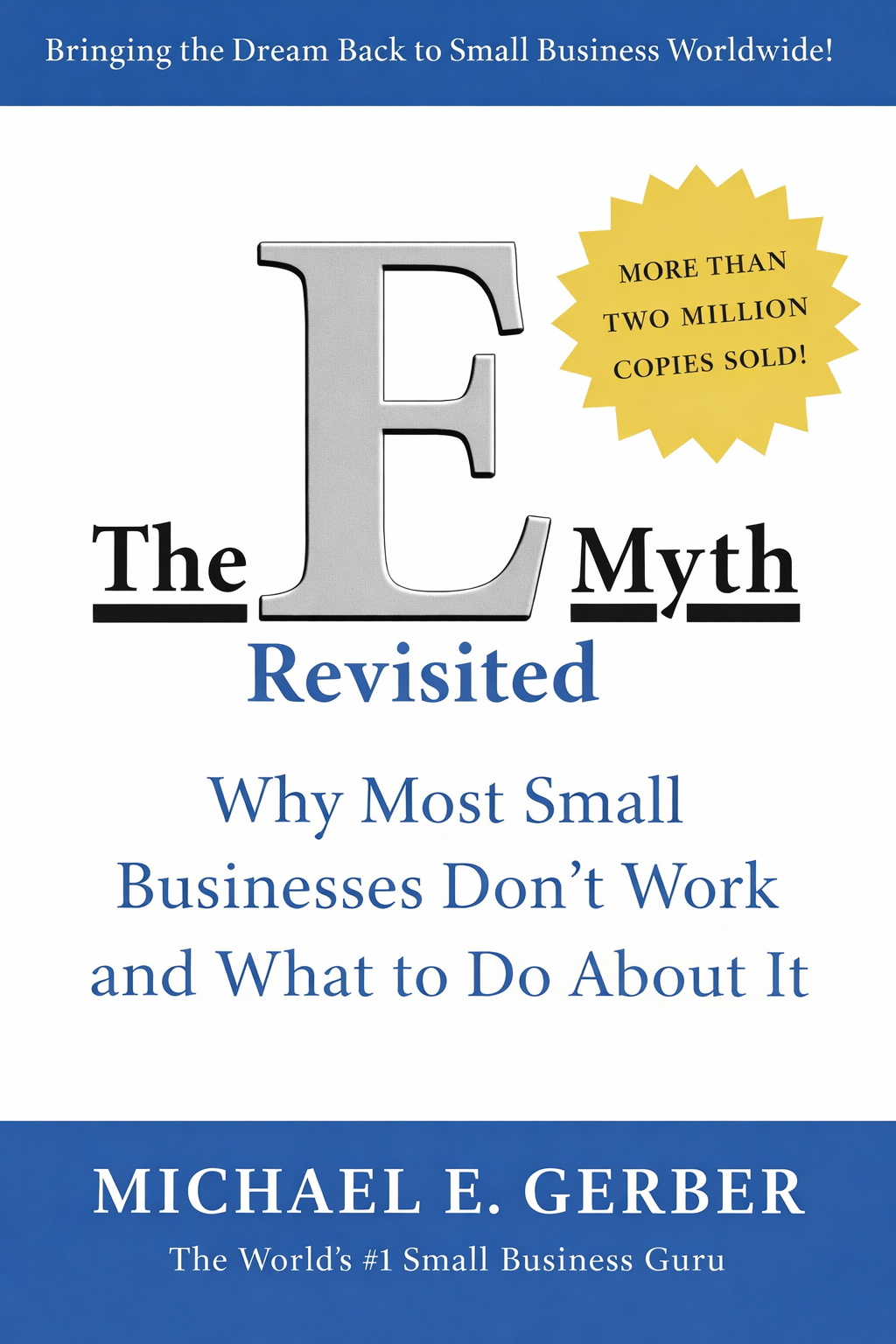
The E-Myth Revisited earns its place here because it is strong for building systems instead of owning a job. It helps founders see that a business is not just a product; it is a repeatable way of delivering value.
Who it's for
Small business owners and solo founders who feel trapped in daily work.
Why you'll like it
You will like it if you want a book with a clear point of view rather than a title that is famous for vague reasons. It gives you enough story, evidence, or practical framing to remember the idea after you close the book.
Key lessons
- Work on the business, not only in it.
- Systems make quality repeatable.
- Roles should be clear even in small teams.
Pros
- Very practical for small business.
- Easy to remember.
Cons
- Less startup-specific.
- Some examples feel old-fashioned.
My recommendation
Read it if your company depends too much on your personal effort. If you are choosing between several books on this page, read a sample first and notice which voice makes you want to keep going. The best recommendation is the one you will actually finish and use.
8. The Everything Store by Brad Stone
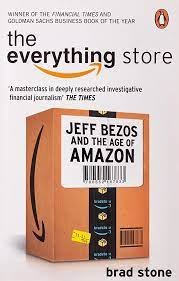
The Everything Store earns its place here because it is strong for ambition, scale, and relentless customer focus. Amazon's story shows what a long-term, high-conviction company can look like in practice.
Who it's for
Readers who like company biographies with strategic lessons.
Why you'll like it
You will like it if you want a book with a clear point of view rather than a title that is famous for vague reasons. It gives you enough story, evidence, or practical framing to remember the idea after you close the book.
Key lessons
- Long-term thinking can be a competitive edge.
- Customer obsession changes decisions.
- Scale creates new tradeoffs.
Pros
- Readable and instructive.
- Strong portrait of execution intensity.
Cons
- Not a how-to manual.
- Some leadership choices are uncomfortable.
My recommendation
Read it as a case study in ambition, not as a model to copy blindly. If you are choosing between several books on this page, read a sample first and notice which voice makes you want to keep going. The best recommendation is the one you will actually finish and use.
9. Measure What Matters by John Doerr
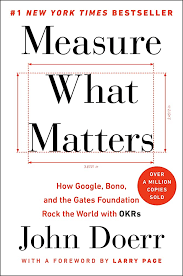
Measure What Matters earns its place here because it is strong for turning ambition into aligned goals. It helps founders translate strategy into focused execution using objectives and key results.
Who it's for
Growing teams that need shared priorities.
Why you'll like it
You will like it if you want a book with a clear point of view rather than a title that is famous for vague reasons. It gives you enough story, evidence, or practical framing to remember the idea after you close the book.
Key lessons
- Goals need clarity and ownership.
- Measures should expose progress.
- Alignment prevents scattered work.
Pros
- Useful for teams.
- Simple language around execution.
Cons
- OKRs can become bureaucracy.
- Examples vary in usefulness.
My recommendation
Read it when everyone is busy but the company lacks one clear scoreboard. If you are choosing between several books on this page, read a sample first and notice which voice makes you want to keep going. The best recommendation is the one you will actually finish and use.
10. The Almanack of Naval Ravikant by Eric Jorgenson
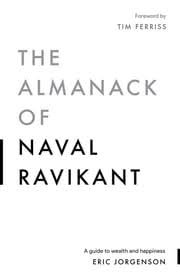
The Almanack of Naval Ravikant earns its place here because it is strong for judgment, leverage, ownership, and independent thinking. It shares Zero to One's respect for original thought while broadening the discussion to wealth, happiness, and leverage.
Who it's for
Founders who want strategic perspective beyond startup tactics.
Why you'll like it
You will like it if you want a book with a clear point of view rather than a title that is famous for vague reasons. It gives you enough story, evidence, or practical framing to remember the idea after you close the book.
Key lessons
- Specific knowledge compounds.
- Ownership matters.
- Leverage lets judgment scale.
Pros
- Thought-provoking and highly quotable.
- Easy to revisit in pieces.
Cons
- It is a collection, not a linear argument.
- Some ideas need careful context.
My recommendation
Read it when you want founder philosophy without another operating manual. If you are choosing between several books on this page, read a sample first and notice which voice makes you want to keep going. The best recommendation is the one you will actually finish and use.
Which Book Should You Read Next?
Start with The Hard Thing About Hard Things if you want the most honest companion to Zero to One. Choose The Mom Test if your idea is still early and you need better evidence from real customers. If two books are competing for your attention, choose the one that matches your current problem, not the one with the biggest reputation. Reading at the right moment is often what makes a book feel transformative.