10 Books to Read in Your 20s
Your twenties are usually the decade when you are trying to become more than a version of yourself that is still figuring things out. You are learning what kind of work matters to you, how to handle money without panic, how to build better habits, and how to become a person who can live with both uncertainty and responsibility.
This list is designed for that season of life. It focuses on books that help with identity, direction, focus, communication, and building a strong foundation before your thirties add even more complexity.
Quick Picks
- Best overall: The Defining Decade
- Best for habits: Atomic Habits
- Best for money: The Psychology of Money
- Best for work: So Good They Can't Ignore You
Comparison Table
| Book | Best For | Best Match | Difficulty |
|---|---|---|---|
| 1. The Defining Decade | Early adult decisions | Readers who want direction without panic | Easy |
| 2. Atomic Habits | Daily systems and consistency | Readers who want practical habits without overwhelm | Easy |
| 3. The Psychology of Money | Financial behavior and long-term decisions | Readers who want calmer, smarter money habits | Easy |
| 4. So Good They Can't Ignore You | Career skill and mastery | Readers questioning passion-first advice | Moderate |
| 5. Designing Your Life | Career experiments and life design | Readers feeling stuck choosing one perfect path | Moderate |
| 6. Man's Search for Meaning | Purpose and resilience | Readers seeking perspective during uncertainty | Moderate |
| 7. How to Win Friends and Influence People | Communication and relationships | Readers who want to become easier to work with | Easy |
| 8. Deep Work | Focus and output | Readers overwhelmed by distraction and shallow attention | Moderate |
| 9. The War of Art | Creative resistance and action | Readers delaying work that matters | Moderate |
| 10. The Alchemist | Purpose, risk, and personal calling | Readers craving courage and a deeper sense of direction | Easy |
How I Chose These Books
I chose books that do different jobs. Some are practical, some are emotional, some are philosophical, and some are useful because they challenge the way you think about effort, purpose, and identity. The twenties are a time to build a foundation, not to collect a shelf full of books that all say the same thing.
I also focused on suggestions that are readable, relevant, and actionable. These are not books that only sound smart. They are books that can actually shape your choices while you are still figuring out your life.
1. The Defining Decade by Meg Jay
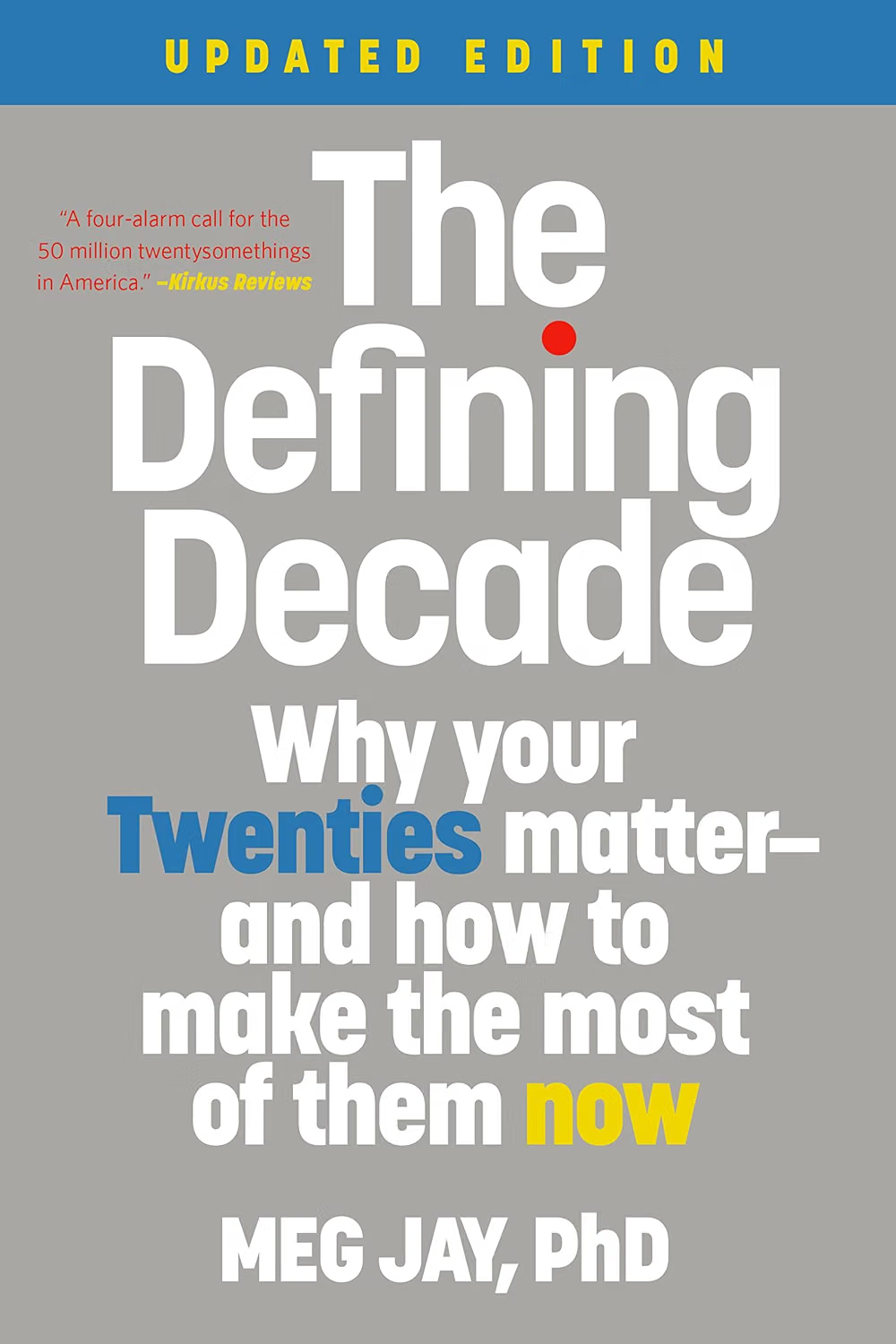
If there is one book that captures the emotional reality of your twenties, it is this one. The Defining Decade is practical without being dry, and it speaks directly to the questions people often ignore during this period: career direction, love, identity, and the cost of waiting for clarity before taking action.
Who it's for
Readers who feel pressure to have their life figured out before they are ready.
Why you'll like it
You will like it because it does not romanticize uncertainty. It gives you a realistic way to think about choices that matter: work, relationships, and the habits that either create momentum or quietly erode it.
Key lessons
- Early adulthood is not a waiting room; it is a period of real leverage.
- Good choices compound over time, especially in work, love, and self-respect.
- Clarity usually comes after motion, not before it.
Pros
- Highly relevant for the twenties.
- Clear, direct, and easy to apply.
Cons
- Some readers may want more tactical examples.
- It is most useful if you are in a transition or at a decision point.
My recommendation
Read this early in your twenties if you want a realistic guide to the decade without feeling pressured to have a perfect life by 25.
2. Atomic Habits by James Clear
Your twenties are often full of ambition but not always full of systems. Atomic Habits is one of the best books for turning vague motivation into stable routines. It is especially useful for readers who want better habits without turning self-improvement into a second job.
Who it's for
Readers who want better structure in work, health, study, and personal growth.
Why you'll like it
You will like it because it is practical, clear, and easy to put into motion. It helps you understand that real change usually comes through tiny upgrades repeated consistently, not through dramatic bursts of discipline.
Key lessons
- Systems beat goals when goals are vague or inconsistent.
- Environment design matters more than motivation.
- Identity-based habits are stronger than willpower alone.
Pros
- Highly actionable and easy to read.
- Works across career, fitness, learning, and daily routines.
Cons
- It can feel familiar if you already read a lot on habit building.
- Its value depends on actually applying the ideas.
My recommendation
Read this if you want a practical reset for your routines, especially if your twenties feel busy but not deeply intentional.
3. The Psychology of Money by Morgan Housel
If you are figuring out how to earn, save, spend, and think about money without anxiety, this book is essential. The Psychology of Money is especially useful in your twenties because you are forming your relationship with money before a lot of financial mistakes become harder to reverse.
Who it's for
Readers who want better financial habits and less emotional money stress.
Why you'll like it
You will like it because it explains money in a way that is realistic and humane. It is less about maximizing every dollar and more about building a prudent life around your values and tolerance for risk.
Key lessons
- Wealth is often built by behavior, not by intelligence alone.
- A calm, long-term approach usually beats chasing short-term wins.
- Your financial decisions are shaped by emotions, history, and habits as much as by math.
Pros
- Highly readable and memorable.
- Useful for beginners and experienced readers alike.
Cons
- It is more behavioral than technical.
- Readers looking for detailed investing strategy may want more.
My recommendation
Read this before you begin making bigger financial decisions. It is a book that helps you think more clearly about what actually matters.
4. So Good They Can't Ignore You by Cal Newport
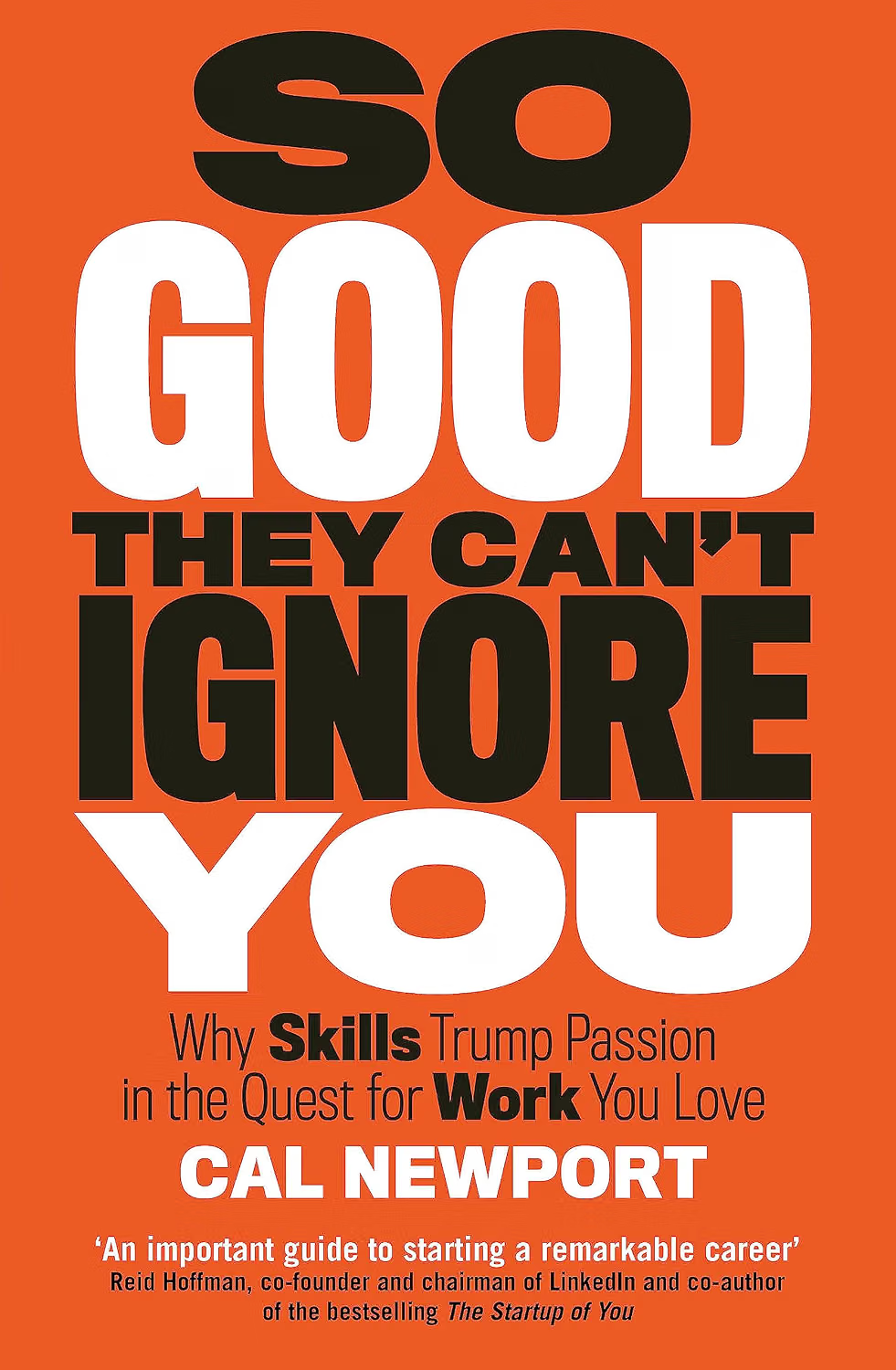
Many people in their twenties are told to “follow their passion,” but that advice can become confusing when you are still discovering what you are good at. This book offers a more solid path: build rare and valuable skills, and then let your career grow from that foundation.
Who it's for
Readers who want a more grounded approach to career decisions.
Why you'll like it
You will like it because it challenges vague advice and replaces it with a clearer model. It helps you think like a builder: how to create career capital, improve your options, and become more valuable in the process.
Key lessons
- Career satisfaction often comes from skill, impact, and autonomy.
- Passion is often a result of competence, not the starting point.
- Work becomes more meaningful when you become harder to replace.
Pros
- Very relevant for early career decisions.
- Offers a practical alternative to passion-first thinking.
Cons
- It is not a quick motivational read; it asks for patience.
- Some readers may want more emotional or personal guidance.
My recommendation
Read this if you are deciding what work should look like in your twenties and want a mindset that is grounded in value and skill.
5. Designing Your Life by Bill Burnett and Dave Evans
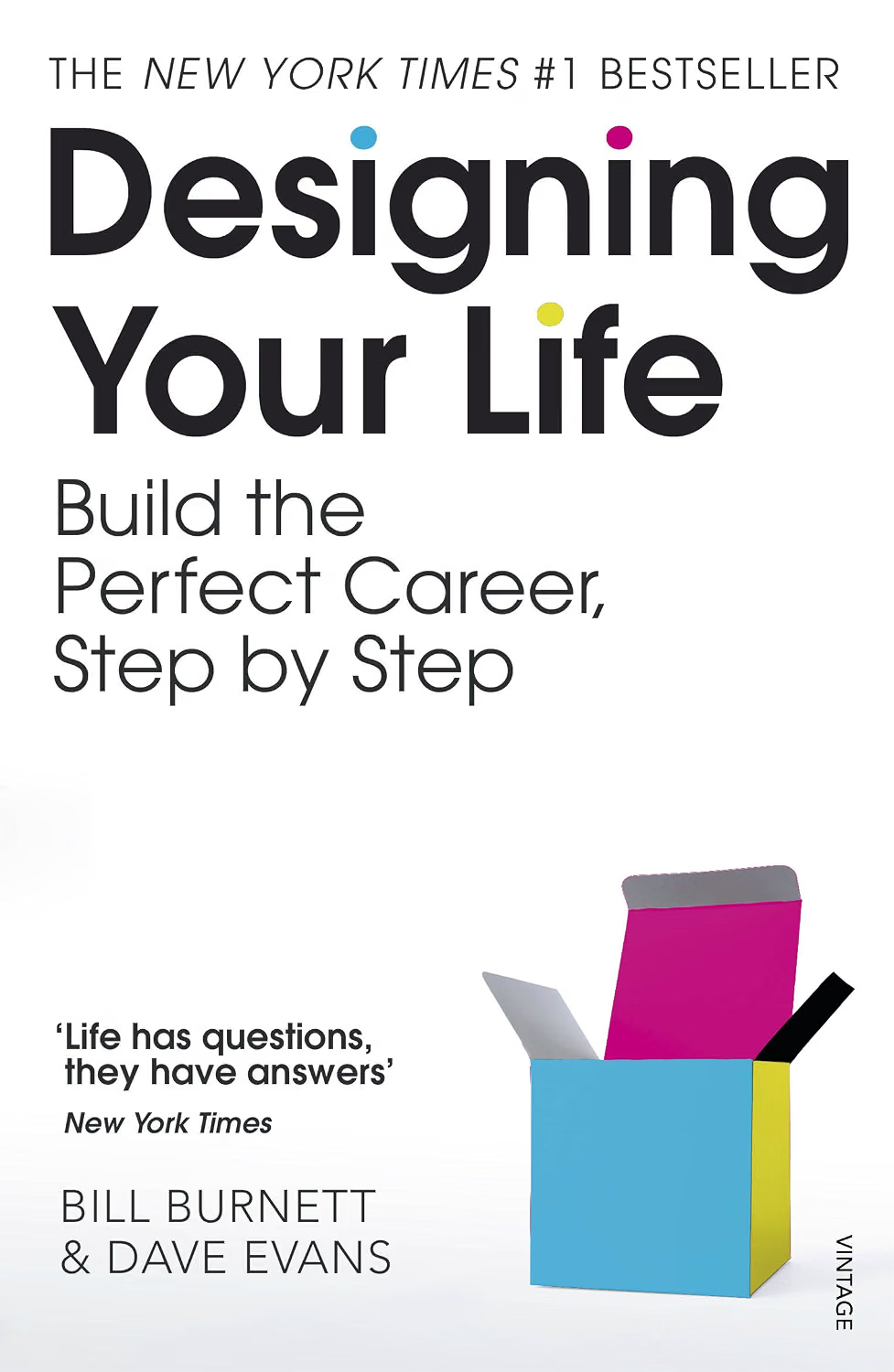
Your twenties often include the uncomfortable truth that you do not need to know the single right path before you begin. Designing Your Life is useful because it reframes career and life decisions as experiments rather than final verdicts.
Who it's for
Readers stuck between indecision, ambition, and the fear of choosing wrong.
Why you'll like it
You will like it because it helps you think in terms of prototypes and options instead of waiting endlessly for certainty. It is practical, creative, and surprisingly encouraging for people who feel too far behind or too uncertain.
Key lessons
- You can test a life direction before committing to it permanently.
- Life design works better than perfection when you are still learning.
- A career can be built through iteration, not only through a single grand plan.
Pros
- Especially useful if you feel stuck or restless.
- Combines structure with creative thinking.
Cons
- Some readers may want more hard-edge career advice.
- It works best when you are ready to take action, not just read.
My recommendation
This is a smart read for anyone who feels pressure to pick one perfect path and is tired of the idea that life needs to be fully mapped out before it begins.
6. Man's Search for Meaning by Viktor E. Frankl
Meaning is not a luxury issue. It is part of how people become steady, resilient, and honest with themselves. This book is especially relevant for readers in their twenties because the decade is full of pressure to succeed without first understanding what gives life weight.
Who it's for
Readers seeking perspective when life feels noisy, uncertain, or too performance-focused.
Why you'll like it
You will like it because it turns abstract questions like purpose and suffering into something deeply human and surprisingly practical. It helps you understand what actually remains under your control.
Key lessons
- Meaning is not always found; it is often created through how you respond.
- Perspective changes how you carry pressure.
- Purpose grows from responsibility, values, and attention, not only from achievement.
Pros
- Profound and memorable.
- Gives clarity when life feels too fast or too abstract.
Cons
- It is emotionally heavy at times.
- Its insights require reflection, not just speed-reading.
My recommendation
Read it once during your twenties, even if you are not feeling dramatic or crisis-driven. It is one of those books that quietly changes your lens.
7. How to Win Friends and Influence People by Dale Carnegie
Your twenties often involve learning how to work with people, handle conflict, and become easier to trust. This classic remains relevant because the basics of human connection are not outdated: listening well, showing genuine interest, and understanding how to make people feel seen.
Who it's for
Readers who want stronger communication, confidence, and relational clarity.
Why you'll like it
You will like it because it offers practical, memorable advice about everyday social dynamics. It is not a manipulative guide; it is a useful book on empathy, respect, and communication.
Key lessons
- People respond better to appreciation than to criticism.
- Listening is often the strongest social skill.
- Good relationships are built on emotional intelligence, not just technical competence.
Pros
- Actionable and timeless.
- Valuable for work, friendships, and relationship building.
Cons
- Some ideas feel dated or repeated.
- It works best if you apply it rather than simply admire it.
My recommendation
Read this if you want to become a better teammate, friend, collaborator, and listener while you are still learning how to navigate adulthood.
8. Deep Work by Cal Newport
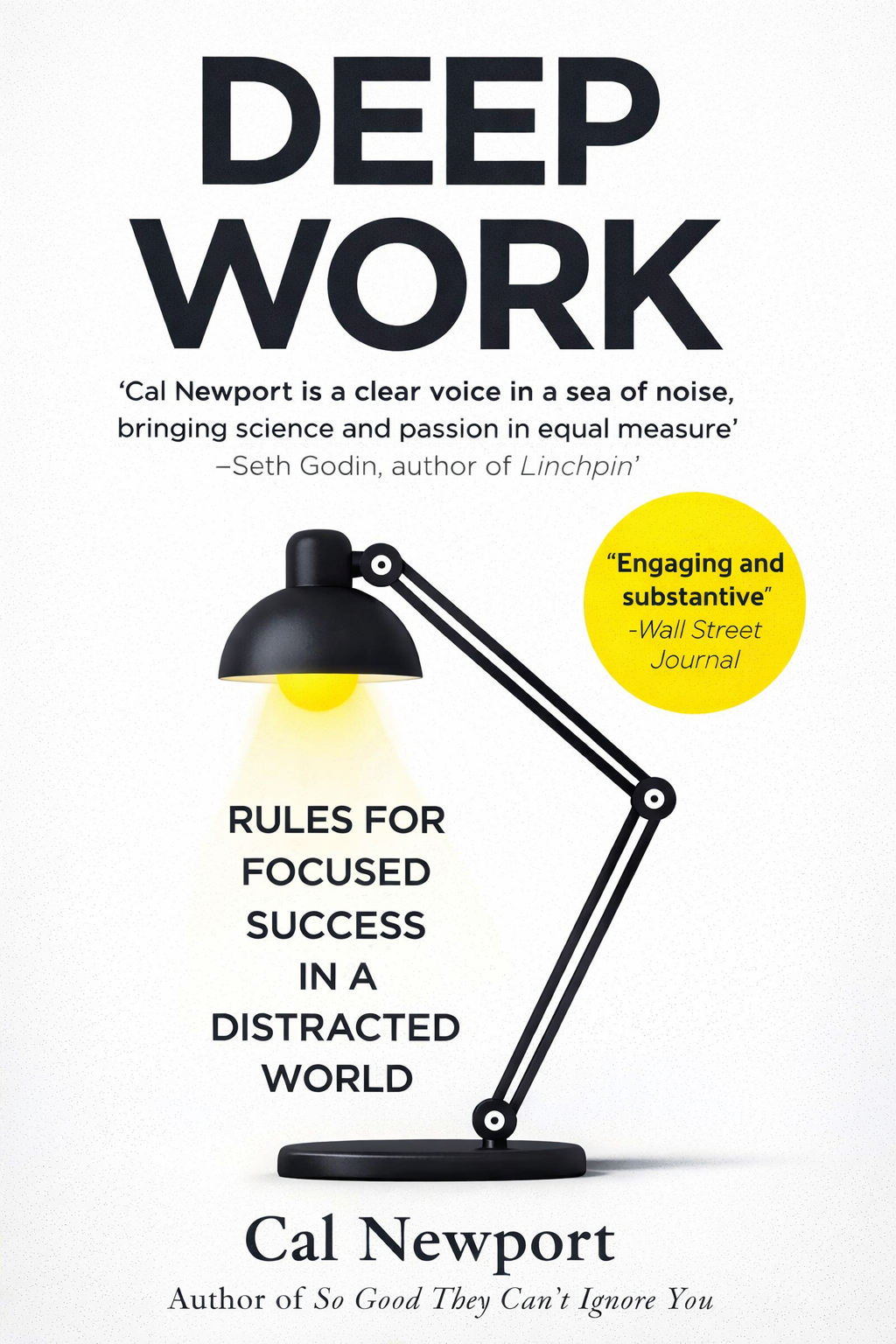
Deep Work is one of the most useful books for people whose attention is being fragmented by notifications, tabs, group chats, and fast content. In your twenties, attention is not just a productivity issue; it is part of how you shape your future skills and your ability to produce meaningful work.
Who it's for
Readers feeling distracted, overstimulated, or unable to think deeply for long periods.
Why you'll like it
You will like it because it gives a clear framework for protecting focus. It turns attention into a skill you can build, rather than a trait you either have or do not have.
Key lessons
- Depth is a competitive advantage.
- Shallow attention is often seducing but expensive.
- Focus is something you design, not something you hope to stumble into.
Pros
- Extremely relevant for modern work and study.
- Helpful for building serious skill and long-form thinking.
Cons
- It requires you to change your environment and routines.
- Some readers may find the structure demanding at first.
My recommendation
Read this if your life feels busy but not particularly focused. It is a book about protecting your attention long enough to become valuable.
9. The War of Art by Steven Pressfield

Many people in their twenties are full of ideas but not full of follow-through. The War of Art is useful because it names a problem most creative people know well: resistance. It is not just about productivity; it is about the internal habits that keep us from building what matters.
Who it's for
Readers who keep postponing creative or meaningful work.
Why you'll like it
You will like it because it gives language to a very common obstacle: the part of us that prefers comfort over commitment. It is direct, vivid, and motivating without pretending the work is easy.
Key lessons
- Resistance is not a sign that you are unfit; it is a sign that you are confronting something meaningful.
- Creativity requires courage more than inspiration.
- Action is often the cure for self-doubt.
Pros
- Highly motivating for creative work.
- Memorable, blunt, and easy to revisit.
Cons
- It can feel intense or repetitive in style.
- Its tone may not resonate with everyone.
My recommendation
Read this when you are ready to stop waiting for the perfect mood and start doing the work that matters to you.
10. The Alchemist by Paulo Coelho
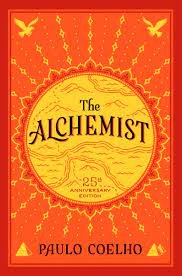
The Alchemist is not a business book, and it is not a manual. It is a reflective read about courage, intuition, and the risk of wanting something enough to pursue it. In your twenties, that message can be surprisingly useful because it reminds you that a meaningful life often begins with a decision to move toward what matters.
Who it's for
Readers feeling uncertain but drawn toward a life that feels more emotionally honest.
Why you'll like it
You will like it because it is beautifully simple and thought-provoking. It invites you to think about whether you are living by habit or by calling, and whether your life is being shaped by fear or by meaningful intention.
Key lessons
- Meaningful goals rarely arrive with total certainty.
- Personal growth often requires tradeoffs and discomfort.
- Following your path is not always easy, but it is usually more freeing than staying stuck.
Pros
- Beautiful, memorable, and emotionally resonant.
- Useful for readers who need a philosophical reset.
Cons
- It is more reflective than practical.
- Its writing style may not appeal to every reader.
My recommendation
Read this if you want a book that makes you think about what you are actually chasing and whether you are willing to pursue it with courage.
Which Book Should You Read Next?
If you want the clearest start, begin with The Defining Decade. If you need structure, read Atomic Habits. If you want to think more seriously about money or career, choose The Psychology of Money or So Good They Can't Ignore You. The best next book is the one that matches the problem you are actually trying to solve.